Natural Environment Contributes Children’s learning and Development
The Natural Environment in the Steiner Setting
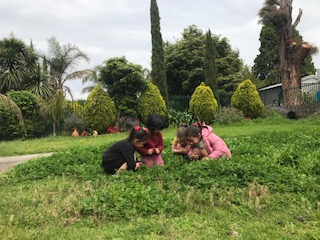
The outdoor environment in the Steiner early childhood setting is surrounded by nature, including trees, shrubs, vines, flowers, grasses, edible fruits and vegetables. Children are stimulated by the beauty of the nature around them and discover all natural phenomena, beautiful sights, sounds and textures. Children are role-modelled to take care of their environment, including trees, plants, gardens, etc. Natural environments enhance children’s physical, sensory, social, emotional and intellectual development, allowing them to learn natural wisdom.
Physical development: Being in nature, children feel free to explore; they like to jump, hop, skip, climb, run and make noise. They take actions to investigate, inquire and create ideas for playing with others. They use leaves, nuts, twigs, grass, mud and soil for dramatic plays and making stories. The natural environment provides fresh air, shaded space, reduces heat in the hot summers and encourages children to play outside, contributing to their physical development. In addition, the outdoor light is vital to the immune system and makes us happier.
Sensory stimulation: Being in nature, children learn from their senses, including seeing, hearing, touching and smelling. Nature is filled with the fragrance of flowers, birds singing in the tree, bees buzzing, leaves falling, butterflies fluttering, mini creatures crawling and caterpillars eating leaves. Children enjoy such sensory stimulation from nature.
Social and Emotional development: Being in nature, children feel calm and peaceful. They are free to explore, move about and express their joy without limitation. Children with high energy levels feel much calmer when interacting with natural wonders, such as watching a bug crawl. Some research shows nature can reduce symptoms of ADHD and anxiety. Nature empowers the children to develop trust in the goodness of the world and those around them.
Intellectual development: Being in a natural environment, children develop observational skills, problem-solving skills, creativity and an inquisitive mind by experiencing and doing. They learn a diversity of materials, sizes, textures, weights, patterns, colors, sights, scents and sounds.
Learning natural wisdom: In the Steiner setting for early childhood, children learn the seasons. Each season, children do different activities for the season to celebrate and appreciate the offerings nature gives to us. In Spring, children engage in planting seeds; in Summer, they watch the plants grow with gentle care; in Autumn, children harvest vegetables and fruits; while in Winter, children enjoy cold weather, walking in the rain and jumping in puddles. Each season, children observe the changes, the weather, trees, plants and creatures. All year round, children learn to take care of their trees, plants and environment and they develop strong connections with the natural world from caring for their natural environment.
The rain, wind and extreme weather, including hot and cold weather, offer children precious experiences to understand our natural world.
As the natural environment has so many benefits for children’s learning and development, parents should consider the natural environment when choosing a service for their child’s care. Parents can also take children to play in natural environments as much as possible if they do not have backyards.
Children’s Services Regulations 2009, the Victorian Early Years Learning and Development Framework and the Early Years Learning Framework for Australia all emphasize that children need to explore in the natural world.
 Steiner Early Learning